The Faculty of Applied Languages of Bratislava University of Economics and Business was represented at the international conference TRANSLATION – international · digital · vernetzt (November 26–28, 2025, University of Vienna) by Jozef Štefčík with his expert contribution "Künstliche Intelligenz in der Ausbildung von Sprachexperten: Herausforderung oder Bedrohung?" (Artificial Intelligence in the Education of Language Experts: Challenge or Threat?).
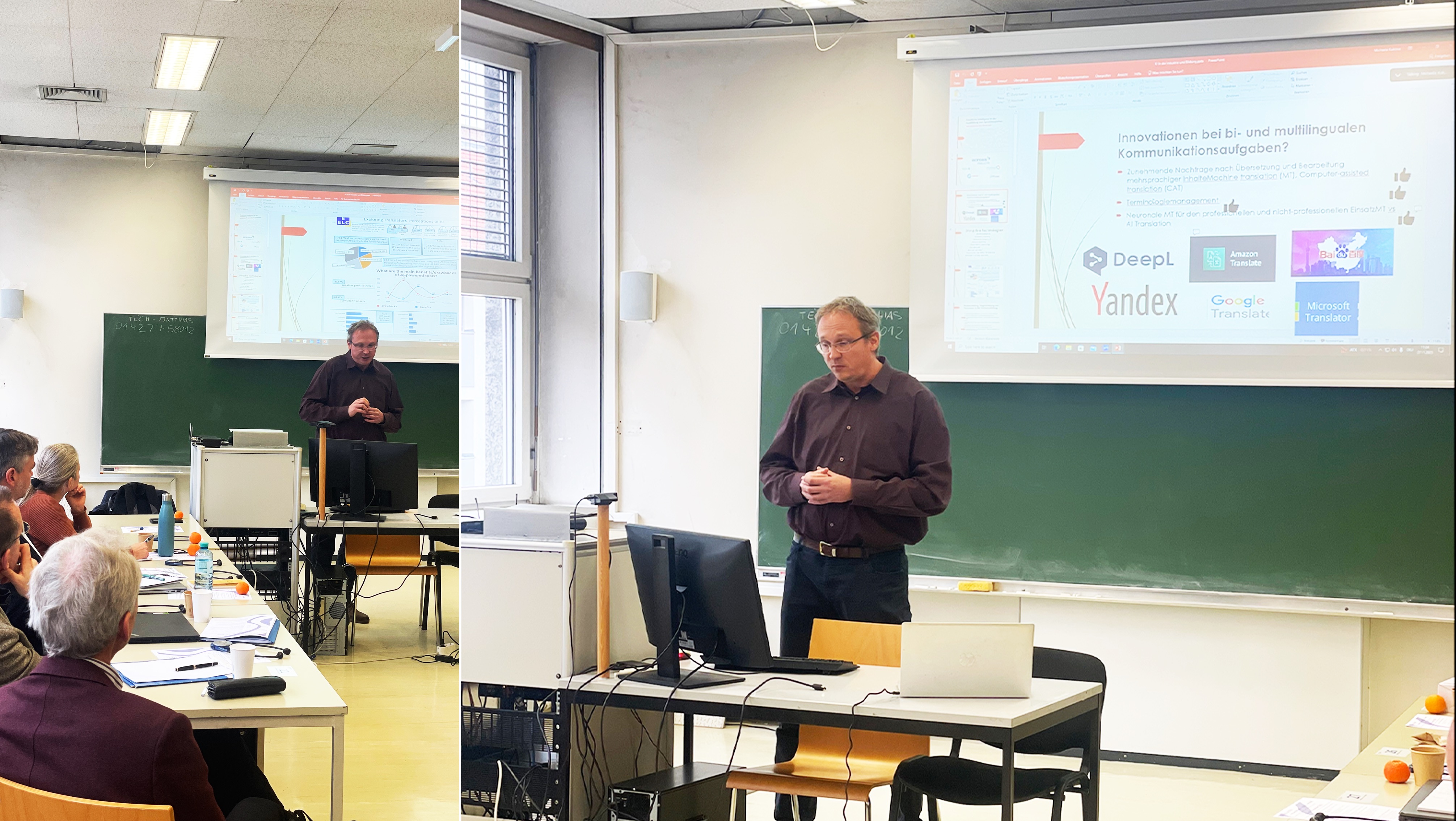
The presentation focused on the role of artificial intelligence in the education of future language professionals, particularly its impact on translation and linguistic practice. The discussion raised questions about the use of AI in translation, the ethical limits of automation, and the balance between human creativity and technological precision.
The event began with a festive opening of the exhibition "Jiří Levý – ein innovativer Theoretiker und vor allem ein wunderbarer Mensch" (Jiří Levý – an innovative theorist and, above all, a wonderful person), dedicated to the pioneer of modern translation studies, Jiří Levý. The opening took place at the Galerie auf der Pawlatsche at the Institute of Slavic Studies at the University of Vienna and created a dignified atmosphere for the start of the professional program.
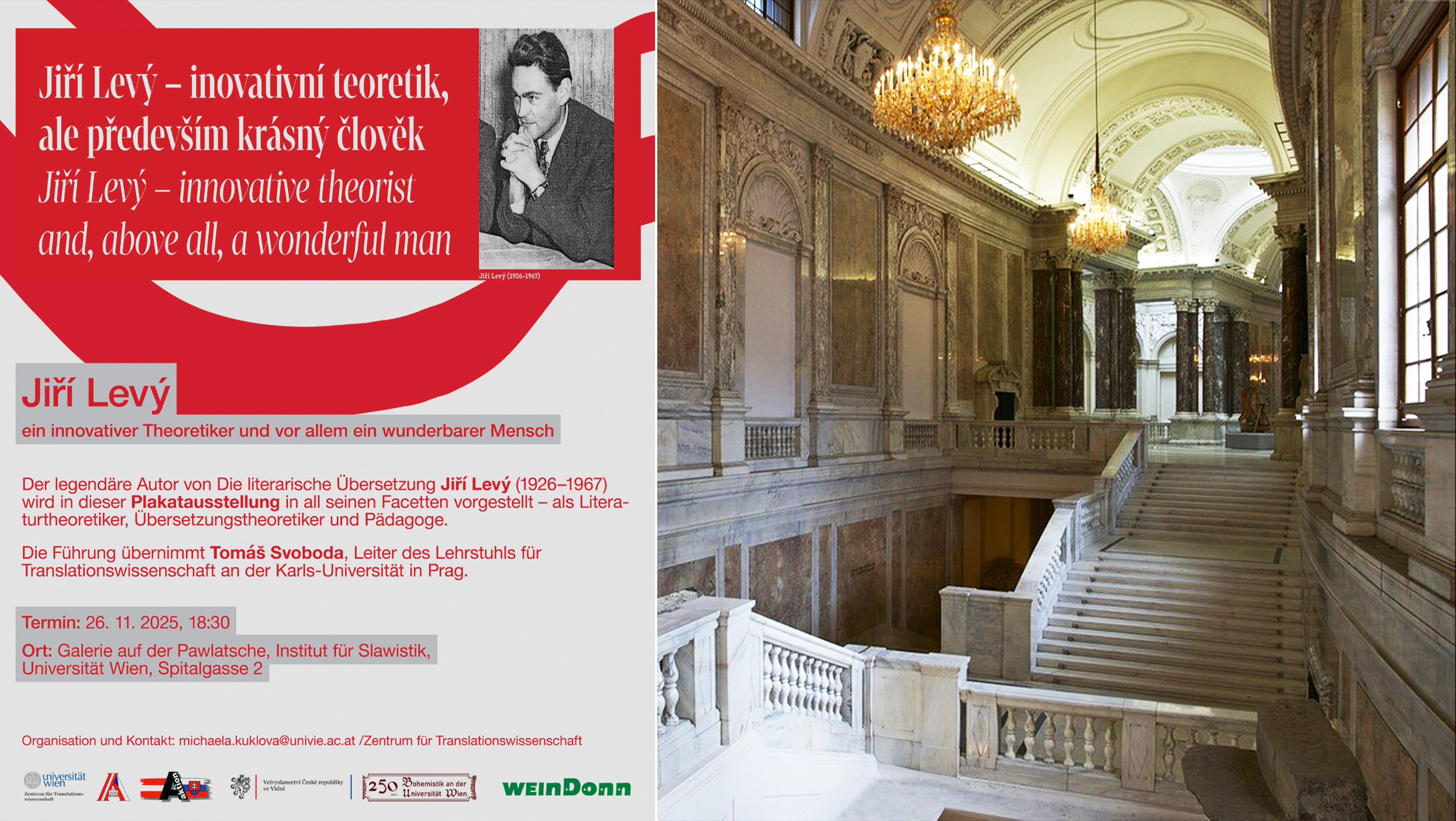
The opening of the conference was complemented by a social evening with a discussion on Jiří Levý's legacy for contemporary translation theory, which was held in the spirit of cooperation between the academic and translation communities.
The conference focused on the interconnection of digital technologies, artificial intelligence, and language education. The program included several thematic blocks, among them:
• Competencies of translators of the future.
• Artificial intelligence in translation teaching?
• Innovative university formats and projects.
• Corpus approaches in translation didactics.
Experts from Austria, the Czech Republic, and Slovakia presented innovative approaches to teaching translation, post-editing, and the integration of AI into the academic environment. The aim of the conference was to seek new models for linking theory, practice, and technological tools that shape the future of translation studies.
The program also included two thematic discussions:
• "Texte aus der Maschine? Literarisches Übersetzen und Künstliche Intelligenz" – on the limits and possibilities of artificial intelligence in literary translation.
• "Sichtbar. Vernetzt. Gemeinsam." – a concluding plenary debate on cooperation between universities and translation institutions in an international context.
The discussions confirmed that artificial intelligence is an integral part of translation practice, but at the same time requires new educational approaches that support the responsible and creative use of technology.
The Faculty of Applied Languages' participation in the TRANSLATION 2025 conference confirmed its active role in the European research and academic space, as well as its commitment to combining language, technology, and innovation for the benefit of educating a new generation of language experts.